Movement & Injury Prevention Tips
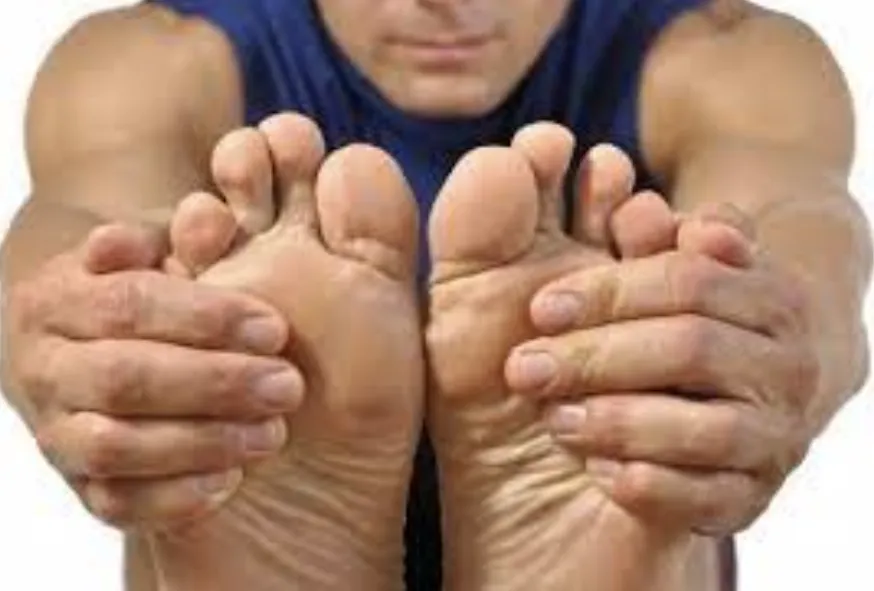
Plantar Fasciitis for Runners: Root Cause & Corrective Exercise | Dr. Heather
Plantar Fasciitis for Runners:
Why Stretching Isn't Enough (And What Actually Fixes It)
If you're a runner dealing with plantar fasciitis, you know the routine: that first-step-out-of-bed pain, the heel ache that fades mid-run but comes roaring back after you sit down, the tight calf you've been rolling and stretching for months.
You've probably tried everything. Stretching. Foam rolling. Night splints. New shoes. Maybe even orthotics.
And the plantar fasciitis keeps coming back.
Here's why: plantar fasciitis is not a foot problem. It's a load problem — and the source of that excess load is almost always further up the chain, in the movement patterns driving how your foot hits the ground thousands of times per run.
Until you address those patterns, you're treating a symptom while the cause goes untouched. And the symptom will keep returning.
What Is Plantar Fasciitis?
The plantar fascia is a thick band of connective tissue that runs along the bottom of the foot, connecting the heel bone to the base of the toes. It plays a critical role in supporting the arch and absorbing the impact forces of each foot strike.
When the plantar fascia is repeatedly overloaded — taking on more stress than it can recover from — it develops micro-tears, particularly at the attachment point on the heel. The result is inflammation and that characteristic sharp heel pain, especially first thing in the morning when the tissue has contracted overnight.
For runners, each step puts two to three times your body weight through the arch. Multiply that by 150–180 steps per minute over a 5-mile run, and you understand why the plantar fascia is vulnerable — especially when movement mechanics are even slightly off.
The Real Root Causes of Plantar Fasciitis in Runners
1. Ankle Mobility Restriction
Limited dorsiflexion — the ability of your ankle to bend upward — is one of the most consistent findings in runners with plantar fasciitis, and it's one of the most underappreciated.
When your ankle can't dorsiflex adequately, your body compensates during the push-off phase of running by pronating (collapsing the arch inward) or by compensating at the knee or hip. That excessive pronation increases tension on the plantar fascia with every step.
Tight calves and the Achilles tendon directly limit ankle dorsiflexion, which is why calf stretching provides some relief for plantar fasciitis — but only some. Stretching addresses the symptom of restricted mobility without addressing why the calves are tight or how that restriction is affecting your entire movement pattern.
2. Foot and Arch Collapse (Overpronation)
Overpronation — the inward rolling of the foot during stance — is a movement fault, not just a foot type. Yes, some runners have structural flat feet. But many runners pronate excessively because their hip and ankle stability isn't keeping the foot in a neutral position during impact.
When the arch collapses, the plantar fascia is stretched beyond its comfortable range with every foot strike. Orthotics can prop the arch up passively — but they don't fix the muscular and movement deficits that are allowing the arch to collapse in the first place.
3. Weak Foot Intrinsics and Hip Stabilizers
Your foot has its own set of small muscles (intrinsics) that support the arch from the inside. In most runners, these muscles are dramatically underused because modern running shoes do much of the work for them. Weak foot intrinsics mean the plantar fascia carries more of the arch-support load — especially during the late stance and push-off phases of running.
Higher up the chain, hip weakness — particularly the glutes and hip abductors — allows the leg to internally rotate and the foot to pronate more during stance. This is the same movement fault behind IT band syndrome and knee pain, and it contributes significantly to plantar fasciitis by increasing the load through the medial foot structures.
4. Running Mechanics: Overstriding and Foot Strike Pattern
Runners who overstride (landing the foot too far in front of the body) create a higher braking force on each step and tend to land with greater impact through the heel. This increases the eccentric load on the plantar fascia and Achilles, especially on hard surfaces.
Heel striking itself isn't inherently wrong — but overstriding combined with heel striking creates a pattern that significantly elevates plantar fascia loading.
Additionally, runners who increase mileage too quickly give the plantar fascia more load than it can adapt to, which is why plantar fasciitis is so common during training buildups and marathon prep.
5. The Calf-Achilles-Plantar Fascia Chain
The calf muscles, Achilles tendon, and plantar fascia function as a single interconnected system called the posterior chain of the lower leg. Tightness or weakness anywhere in that chain changes how load is distributed across the whole system.
When the calves are tight or the Achilles is stiff, the plantar fascia absorbs more of the shock that should be distributed across the entire chain. This is why calf strengthening — specifically eccentric heel drops — is one of the most evidence-backed interventions for plantar fasciitis. But again: strengthening the calves without also addressing what caused them to become restricted in the first place is an incomplete solution.
Why Stretching, Rolling, and Orthotics Have Limits
Toe stretches and calf stretches reduce tension on the plantar fascia temporarily — they don't change how your foot moves, how your ankle is loaded, or how your hip is stabilizing your leg during running.
Foam rolling reduces soft-tissue tension and can help with short-term pain management. Same story — symptom management, not root-cause resolution.
Orthotics passively support the arch and can offload the plantar fascia enough to allow healing. For some runners, they're a helpful short-term bridge. But runners who rely on orthotics without fixing the underlying movement deficits often find they're dependent on them indefinitely — and the pain returns the moment they run without them.
The most durable path to resolving plantar fasciitis is to identify and correct the specific movement faults — ankle mobility, foot stability, hip control, running mechanics — that are causing the plantar fascia to be overloaded in the first place.
What the Corrective Approach Looks Like
A root-cause assessment for plantar fasciitis in runners looks at the whole kinetic chain. Here's what I'm evaluating:
Ankle dorsiflexion range — how much range do you have, and is it the same on both sides?
Foot intrinsic strength — can you control arch height actively, or is your arch collapsing passively with every step?
Hip and glute function — are your hips stabilizing your leg during the stance phase, or is the load defaulting into your foot and calf?
Calf and Achilles integrity — are the calves tight, weak, or both? What does single-leg heel raise performance look like?
Gait mechanics — where does your foot land relative to your body? Do you overstride? Does your arch collapse during push-off?
Training load — did the plantar fasciitis develop in the context of a mileage increase, a surface change, or a shoe change?
Based on what I find, I build a corrective program that addresses the specific chain of deficits driving your case — not a generic plantar fasciitis protocol.
What You Can Start Doing Now
Here are a few things to begin addressing while you figure out your full plan:
Eccentric calf raises. Stand on the edge of a step, rise up on both feet, then lower slowly on just the affected side. This strengthens the calf-Achilles complex eccentrically, which is the most evidence-supported exercise for reducing plantar fascia load. Start with 3 sets of 15 reps daily.
Towel toe scrunches. Place a towel on the floor and scrunch it toward you using just your toes — no cheating with your ankle. This activates the foot intrinsic muscles. Boring, but it works.
Single-leg balance. Simply standing on one foot for 30–60 seconds activates the stabilizing muscles of the foot, ankle, and hip simultaneously. Add a slight bend in the knee to increase the demand.
Check your dorsiflexion. Stand 4 inches from a wall and try to touch your knee to the wall without your heel coming up. If you can't reach, your ankle mobility is restricting normal running mechanics.
Reduce (don't eliminate) running. Going to zero is rarely necessary. Reduce your volume and intensity enough to let the tissue calm down, while staying mobile and continuing your corrective work.
A Word on the Timeline
Plantar fasciitis can be stubborn — partly because the plantar fascia has relatively poor blood supply, which slows healing, and partly because runners keep reloading it before the movement deficits are fixed.
With the right corrective approach, most runners see meaningful improvement within 4–6 weeks. Full resolution — where you've not only healed the tissue but also corrected the mechanics — typically takes 8–12 weeks of consistent work.
The runners who resolve their plantar fasciitis fastest are the ones who stop trying to manage the symptom and start fixing the movement.
The Bottom Line
Plantar fasciitis comes back because most treatment approaches treat the foot while ignoring the kinetic chain above it. Your ankle mobility, hip stability, foot strength, and running mechanics all contribute to how much load your plantar fascia takes on every run — and until those are assessed and corrected, the pain will keep returning.
You don't have to live with plantar fasciitis. You need a clear picture of what's actually causing it for your body — and then a specific plan to fix it.
Ready to figure out what's really driving your plantar fasciitis? Book a free movement consultation — I'll assess your foot, ankle, hip mechanics and give you a clear, root-cause answer.
Already know you want a structured program? My 3-Week Pain Resolution Accelerator is designed specifically for runners ready to break out of a pain cycle and get back to confident, consistent running.
Dr. Heather Gansel is a movement specialist and performance coach with 25+ years helping runners and active athletes resolve chronic pain through root-cause movement correction. She works virtually with athletes worldwide. Learn more about Dr. Heather.