Movement & Injury Prevention Tips
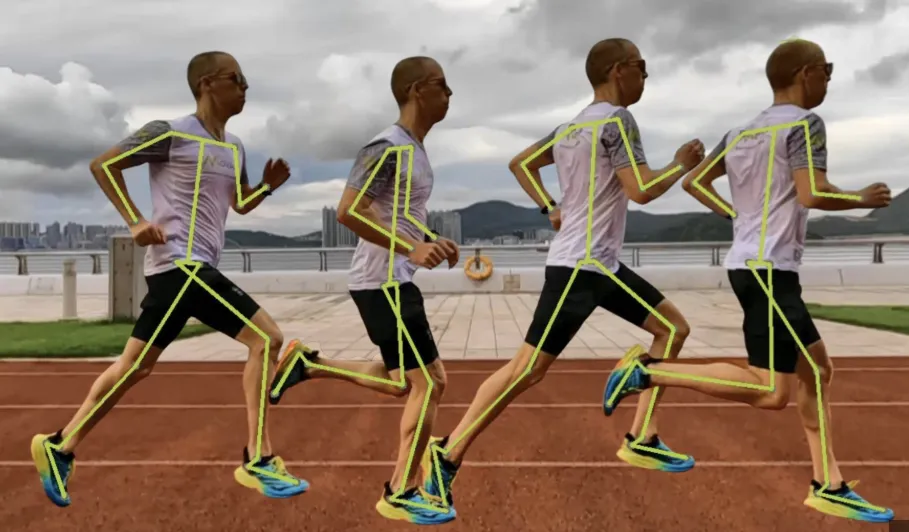
Why Your Running Form Falls Apart When Tired | Ask Doctor Heather
Why Your Running Form Falls Apart at Mile 6 (And What to Actually Do About It)
You know the feeling. The first few miles feel solid. Your breathing is steady, your legs feel good, and you're hitting your pace without much effort.
Then somewhere around mile 5 or 6, something shifts.
Your shoulders start creeping up. Your stride gets sloppy. Everything feels heavier. And if you've been running through any kind of nagging pain — that's usually when it shows up too.
Most runners assume this is a fitness problem. You just need to get in better shape. Run more miles. Build more endurance.
But in 25 years of working with runners, what I see almost every time is something different. Your form doesn't fall apart because you run out of gas. It falls apart because of the movement patterns your body defaults to when it's under stress.
And that distinction changes everything about how you fix it.
The Myth of "Just Run More"
There's a widespread assumption in recreational running that fatigue-related form breakdown is just the price of mileage. That if you run enough, your body will eventually adapt and you'll stop falling apart late in your long runs.
For some runners, that's partially true. But for most of the athletes I work with especially those dealing with recurring pain, running more without addressing underlying movement patterns just loads the same dysfunctions more often.
Rest lets inflammation die down. Running more builds fitness. But neither one changes the pattern.
The pattern stays.
What's Actually Happening When Your Form Breaks Down
When your body fatigues, it doesn't fail evenly. It fails in a very predictable order and that order tells you exactly where your movement problems are hiding.
Here's the sequence I look for:
1. Glute inhibition comes first. Your glutes are your primary power producers in running. They're also the first muscles to go quiet when you're tired, because they require the most neurological "effort" to keep firing correctly. When your glutes check out, everything downstream compensates.
2. Your pelvis loses stability. With the glutes offline, your pelvis starts tipping and dropping with every stride. You'll see this in race photos as a hip drop to one side. It looks like a cosmetic quirk. It's actually your IT band, knee, and low back absorbing forces they were never designed to handle.
3. Your stride lengthens instead of shortens. Counterintuitively, fatigued runners usually overstride - they reach further out in front of their body with each foot strike, which creates a braking effect on every step. More impact. More load. Less efficiency.
4. Your upper body locks up. Shoulders rise, arms cross the midline, the trunk stiffens. This kills your natural rotational efficiency and forces your legs to work even harder to compensate for the lost upper body contribution.
5. Your pace drops but your effort skyrockets. This is the feedback loop that most runners mistake for a fitness problem. You're working harder but going slower not because your cardiovascular system is failing, but because your movement system is burning extra energy on compensation instead of forward propulsion.
Why This Leads to Injury (And Why Rest Doesn't Fix It)
Every time your glutes fail to fire correctly, another structure picks up the load. The IT band gets compressed. The knee medial structures get strained. The plantar fascia gets overloaded. The low back takes impact it shouldn't be taking.
This is why so many runners experience the same injury cycle:
Pain shows up → You rest → Inflammation goes down → You run again → Pain comes back.
The rest didn't fix anything. It just removed the load that was exposing the faulty pattern. The moment you run again, the pattern reactivates and so does the pain.
I see this constantly with runners who've had multiple rounds of physical therapy, cortisone shots, and orthotics. The treatments addressed the symptoms. Nobody addressed the movement.
I break this down in more detail in this video including exactly what I look for in a gait analysis and why it changes the entire approach to treating running injuries:
The 5 Signs to Watch For
If you want to know whether fatigue-related movement breakdown is driving your pain or performance issues, here's what I look for in a gait analysis:
Sign 1: You can't balance on one leg for 30 seconds without significant wobbling. This is the single most reliable quick test for glute stability deficits. If you're unstable on one leg standing still, your glutes are definitely struggling under the dynamic load of running.
Sign 2: Your knees cave inward when you squat or descend stairs. This inward collapse (called valgus) is your glutes failing to control the load through your hip. It's a firing pattern problem, not a strength problem in the traditional sense.
Sign 3: Your low back aches after long runs, not your legs. When glutes don't fire, the paraspinal muscles along your low back compensate. They weren't built for that role. They fatigue quickly, and then they hurt.
Sign 4: Your race photos show one hip consistently lower than the other. Hip drop is one of the clearest visible signs of a unilateral glute stability problem. If it shows up in every race photo, it's showing up on every stride.
Sign 5: Your pain gets progressively worse as runs get longer not randomly. If your pain has a consistent mileage trigger (it shows up at mile 4, or mile 7, or mile 10), that's your body telling you exactly when the compensation pattern overwhelms the primary structures. That's enormously useful diagnostic information.
What to Actually Do About It
Here's where most conventional advice falls short.
The typical recommendation for fatigue-related form breakdown is: strengthen your glutes, work on your core, do more stability exercises.
That's not wrong but it's incomplete.
The issue isn't just that your glutes are weak. It's that your nervous system has stopped including them in your running pattern. You can build strong glutes in isolation (squats, bridges, clamshells) and still have them fail to fire the moment your gait pattern takes over.
What actually works is a three-part approach:
Step 1: Identify what breaks first. This requires watching you run — ideally from multiple angles, at multiple speeds, and at the point of fatigue. Not a quick treadmill assessment. An actual gait analysis that looks at what happens when your movement system is under stress.
Step 2: Retrain the firing pattern. This is neuromuscular work, not just strength work. It involves specific activation sequences, cueing, and movement drills designed to rebuild the connection between your brain and your glutes during the act of running — not just in the gym.
Step 3: Rebuild your running pattern from the ground up. Cadence, foot strike, hip position, trunk position — all of these are interrelated. Once the primary pattern (glute firing) is corrected, the downstream compensations often resolve on their own. But sometimes they need explicit retraining too.
This is the work I do with every runner in my program. It's also why 98% of my clients are running pain-free within three weeks not because I have a magic protocol, but because we find the root cause first and build the solution around that.
If you're dealing with knee pain, IT band issues, or low back pain after runs, this video walks through the three-step process I use to fix running pain at the root cause: Fix Running Pain in 3 Steps
The Good News
Movement patterns can be changed. Your nervous system is adaptable. The compensations your body has built over years of running don't have to be permanent.
The runners who recover fastest aren't the ones who rested the longest. They're the ones who found the cause first.
If any of this sounds like what you've been experiencing - the recurring pain, the form breakdown late in your runs, the treatments that work for a day and then wear off - I'd love to take a look at what's going on with your movement.
I offer a free 15-minute movement consultation where we talk through your pattern and I tell you exactly what I'd look for in your gait. No pitch. Just clarity.
Book your free consultation → askdoctorheather.com
Or start with a gait analysis: go.askdoctorheather.com/gait-5216
You don't have to accept that running hurts. You just have to find the real reason why.
Dr. Heather Gansel is a doctorate-trained movement specialist with 25+ years in biomechanics. She works with runners virtually through Ask Doctor Heather, helping them identify and resolve the root-cause movement patterns behind recurring pain and performance plateaus. Follow her on Instagram @drheathergansel.