Movement & Injury Prevention Tips

Return to Running After Injury: The 3-Phase Framework We Use With Clients | Ask Doctor Heather
October 19, 2026•2 min read

Return to Running After Injury: The 3-Phase Framework We Use With Clients Most runners returning from injury make the same mistake: they wait until the pain is gone, then jump back into their old mileage. Pain-free isn't the same as ready. The tissue that got injured hasn't rebuilt the capacity to handle real training load again - it's just quiet for now, and quiet doesn't last long once you put your old volume back on it. [Create an image - Whiteboard walkthrough of the 3-phase framework below, drawing a simple timeline showing where most runners quit too early (right at the end of Phase 1, when things start feeling fine). Emphasize on camera that Phase 1 "feeling good" is not the finish line. The Three Phases (and Why Skipping One Costs You)Phase 1 - Settle: Pain and inflammation calm down. Most runners think this is the end of rehab. It's the beginning.Phase 2 - Rebuild: Targeted loading rebuilds the tissue's actual capacity to handle stress - this is where the real work happens, and it's the phase most people skip entirely.Phase 3 - Reload: Mileage comes back gradually, layered on top of tissue that's now actually prepared for it, not just pain-free. Skip Phase 2 and go straight from Phase 1 to running your old mileage, and you're rebuilding on a foundation that was never actually rebuilt. That's why so many "recovered" injuries come back within a month of returning to running. What This Looks Like in Practice A client returning from Achilles tendinopathy doesn't go from zero pain straight to five-mile runs. They spend two to four weeks in Phase 2 doing progressive calf loading, only moving to Phase 3 once the tissue has demonstrated it can handle load without symptoms - not just once it stopped hurting at rest. Bottom Line Pain-free means the alarm stopped ringing. It doesn't mean the building got fixed. The runners who stay healthy long-term are the ones who rebuild capacity before rebuilding mileage. If you're coming back from an injury and not sure which phase you're actually in, that's exactly what the 4-month runner program is built to figure out. Rebuild the capacity. Then rebuild the mileage. Dr. Heather Gansel is a doctorate-trained movement specialist with 25+ years in biomechanics. She works with runners virtually through Ask Doctor Heather, helping them identify and resolve the root-cause movement patterns behind recurring pain and performance plateaus. Follow her on Instagram @drheathergansel.. Style: Professional quality, photorealistic, high resolution

Return to Running After Injury: The 3-Phase Framework We Use With Clients

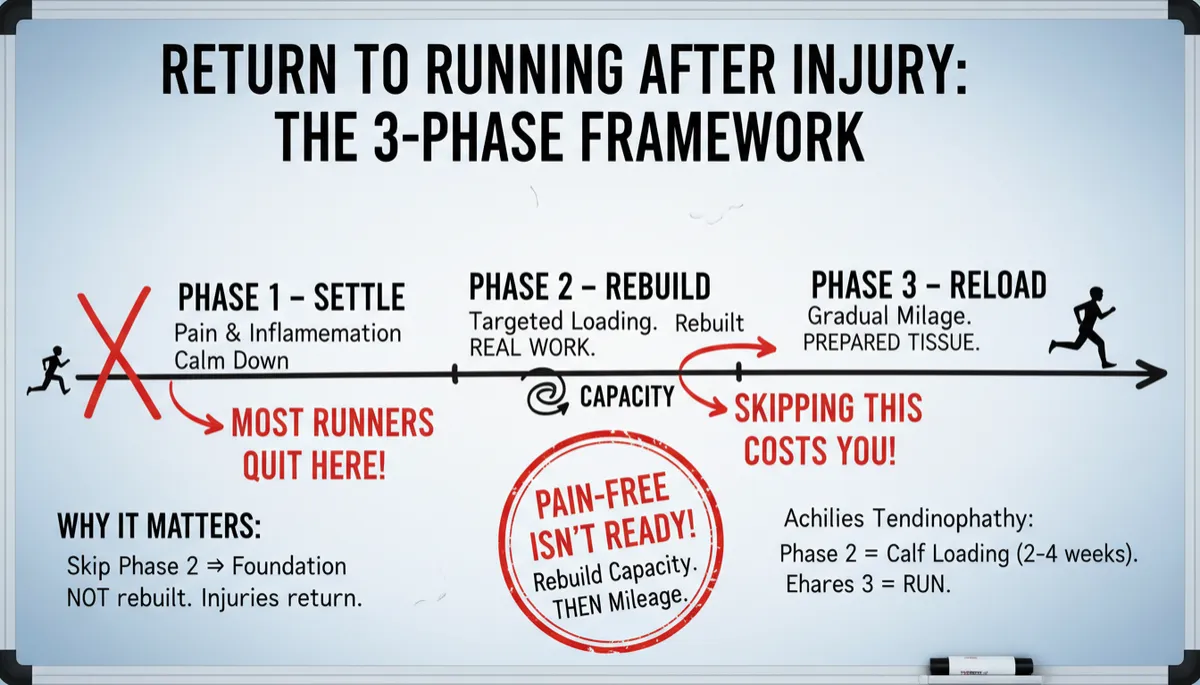
Most runners returning from injury make the same mistake: they wait until the pain is gone, then jump back into their old mileage. Pain-free isn't the same as ready. The tissue that got injured hasn't rebuilt the capacity to handle real training load again – it's just quiet for now, and quiet doesn't last long once you put your old volume back on it.

The Three Phases (and Why Skipping One Costs You)

Phase 1 – Settle: Pain and inflammation calm down. Most runners think this is the end of rehab. It's the beginning.

Phase 2 – Rebuild: Targeted loading rebuilds the tissue's actual capacity to handle stress – this is where the real work happens, and it's the phase most people skip entirely.

Phase 3 – Reload: Mileage comes back gradually, layered on top of tissue that's now actually prepared for it, not just pain-free.

📌 Key Takeaway: If you skip the rebuild phase, you're not rehabbing – you're just waiting for pain to quiet down.

Skip Phase 2 and go straight from Phase 1 to running your old mileage, and you're rebuilding on a foundation that was never actually rebuilt. That's why so many "recovered" injuries come back within a month of returning to running.

What This Looks Like in Practice

A client returning from Achilles tendinopathy doesn't go from zero pain straight to five-mile runs. They spend two to four weeks in Phase 2 doing progressive calf loading, only moving to Phase 3 once the tissue has demonstrated it can handle load without symptoms – not just once it stopped hurting at rest.

Bottom Line

Pain-free means the alarm stopped ringing. It doesn't mean the building got fixed. The runners who stay healthy long-term are the ones who rebuild capacity before rebuilding mileage.

If you're coming back from an injury and not sure which phase you're actually in, that's exactly what the 4-month runner program is built to figure out.

Rebuild the capacity. Then rebuild the mileage.

Dr. Heather Gansel is a doctorate-trained movement specialist with 25+ years in biomechanics. She works with runners virtually through Ask Doctor Heather, helping them identify and resolve the root-cause movement patterns behind recurring pain and performance plateaus. Follow her on Instagram @drheathergansel.


return to running after injuryinjury recovery runnersrunning rehab frameworkreturning to running safelyinjured runner comeback
blog author image

Dr. Heather

Movement specialist and performance coach with 25+ years helping runners resolve chronic pain through root-cause movement correction.

Back to Blog