Movement & Injury Prevention Tips
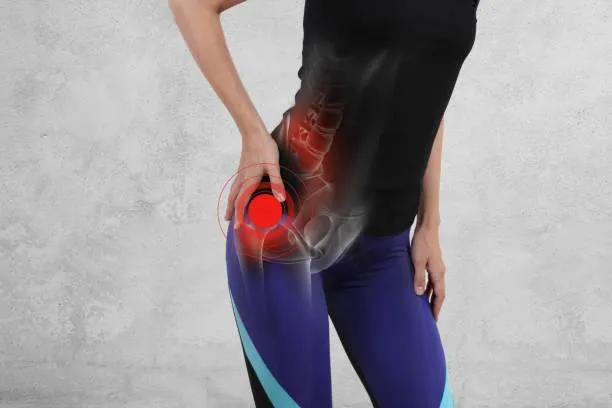
Why Does My Hip Hurt When I Run? Root Causes & Fixes | Dr. Heather
Why Does My Hip Hurt When I Run? The Root Cause Most Runners Never Address
Hip pain when running is one of the most frustrating experiences you can have as a runner. You lace up, hit the pavement, and somewhere around mile two your hip starts talking — a dull ache, a sharp pinch, or that deep grinding sensation that makes you second-guess every step.
You've probably stretched it. Maybe you've rested it. Maybe you've even been to a physical therapist. But the pain keeps coming back.
Here's what I tell every runner I work with: hip pain when running is not the problem — it's the signal. The problem is almost always somewhere else in your movement pattern, and until you address that, the pain will keep returning no matter how much you stretch or rest.
After 25+ years working with runners and active athletes, I can tell you that the vast majority of hip pain cases I see come down to the same handful of movement imbalances. Let me walk you through what's actually happening and what you can do about it.
The Most Common Causes of Hip Pain When Running
1. Weak or Inhibited Glutes
This is the #1 root cause I find in runners with chronic hip pain — and it's almost always overlooked.
Your gluteus medius (the muscle on the side of your hip) is responsible for stabilizing your pelvis every time your foot hits the ground. When you run, you're spending roughly 80% of your time balanced on one leg. If your glute med isn't doing its job, your pelvis drops on the opposite side — a pattern called Trendelenburg gait or hip drop.
That drop creates a cascade: your hip joint takes excess load, your IT band gets pulled tight, your lower back compensates, and your knee starts to rotate inward. Pain can show up anywhere in that chain — and it often shows up at the hip.
The fix isn't just doing clamshells. You need to retrain your glutes to fire correctly in the context of your running pattern — and that requires a movement assessment, not just a strength exercise.
2. Hip Flexor Tightness + Anterior Pelvic Tilt
If you sit for most of your day (and most of us do), your hip flexors are almost certainly shortened and overactive. When you run, tight hip flexors pull your pelvis forward into anterior tilt, which compresses the hip joint at the front and limits hip extension behind you.
Runners with this pattern often describe pain in the front of the hip or groin — especially at the end of a run or going downhill.
Stretching the hip flexor provides temporary relief. But until you also activate the opposing muscles (glutes, deep abdominals) and correct the movement pattern, the tightness will return within days.
3. Hip Drop and Crossover Gait
Many runners — especially those who trained on treadmills or narrow roads — develop a crossover gait: their feet land close to or across the midline with each stride, rather than tracking under the hips. This pattern dramatically increases lateral stress on the hip, IT band, and knee.
Hip drop and crossover gait often travel together, and both trace back to the same root cause: inadequate hip stabilization during the single-leg stance phase of running.
4. Hip Labrum Issues
The labrum is the cartilaginous ring that deepens the hip socket and keeps the ball of the femur seated correctly. Labral tears are more common in runners than most people realize — and they're almost always the result of years of abnormal loading from the movement patterns described above.
If you have a confirmed or suspected labral tear, movement correction becomes even more important, because continuing to run with poor mechanics will worsen the damage over time.
5. Poor Hip Mobility
Restricted hip internal or external rotation is another common finding in runners with hip pain. When the hip can't move through its full range, the body compensates — usually by borrowing motion from the lower back or knee. Over time, this compensation creates both hip pain and pain elsewhere in the chain.
Why Rest Alone Won't Fix Hip Pain When Running
I hear this all the time: "I took two weeks off and the pain went away, but the second I started running again, it came right back."
Of course it did. Rest removes load from the tissue — but it doesn't change the movement pattern that created the problem in the first place. When you return to running, you return to the same mechanics, and the same stress accumulates in the same places.
Hip pain when running is a movement problem. It requires a movement solution.
What the Root-Cause Approach Looks Like
When I assess a runner with hip pain, I'm not looking at the hip in isolation. I'm looking at the entire kinetic chain — how your foot contacts the ground, what your knee does on impact, how your pelvis tracks through your stride, and what your spine is doing to compensate.
Here's a simplified version of what I assess:
Hip abductor strength — can you stabilize your pelvis on a single leg?
Hip flexor length and activation pattern — are you overusing your hip flexors and underusing your glutes?
Gait mechanics — is there a crossover pattern, hip drop, or excessive forward trunk lean?
Ankle and foot mechanics — pronation and restricted ankle mobility both influence how load travels up the chain to the hip
Lumbopelvic control — is your lower back overworking because your hips aren't?
Once I know where the breakdown is, I build a corrective program that addresses it — not just exercises, but retraining the movement pattern itself.
What You Can Start Doing Now
If you're dealing with hip pain when running, here are some starting points:
Single-leg balance test: Stand on one leg for 30 seconds. Does your opposite hip drop? Do you feel wobbly? That's a clue your hip stabilizers aren't keeping up.
Hip flexor length check: Do a kneeling hip flexor stretch (low lunge). If you feel significant tightness or if your lower back immediately arches, hip flexor tightness is likely contributing to your pain.
Check your stride: If you can, film yourself running from the front. Do your feet cross the midline with each step? Does one hip dip lower than the other? These are signs of the movement patterns most commonly linked to hip pain.
But here's what I'll tell you honestly: these self-checks can point you in the right direction, but they can't replace a full movement assessment. Hip pain when running has multiple possible root causes, and the wrong exercises for the wrong cause can make things worse — not better.
The Bottom Line
Hip pain when running is almost never just "tight hips" or "bad luck." It's a signal that something in your movement pattern is overloading a structure that isn't designed to take that much stress.
The runners who solve their hip pain for good are the ones who stop chasing symptom relief and start addressing the movement problem underneath it.
If you're tired of the cycle of rest → run → pain → repeat, I'd love to help you find the actual cause and fix it.
Ready to stop guessing? Book a free movement consultation and I'll assess exactly what's driving your hip pain — so you can get back to running with confidence.
Or if you want to start with a deeper look at how movement imbalances affect the whole body, grab my free low back guide — it walks through the same root-cause framework applied to spinal pain in runners.
Dr. Heather Gansel is a movement specialist and performance coach with 25+ years helping runners and active athletes identify and correct the movement imbalances driving chronic pain. She works with athletes virtually from anywhere in the world. Learn more about working with Dr. Heather.