Find Everything You
Need.





Let's Make Your Vision A
Reality
At Ask Dr. Heather, we specialize in customizable promotional items designed to elevate your brand's visibility. With a wide range of products tailored for effective marketing campaigns, we empower businesses to make a lasting impression on their audience.
Our mission is simple: to provide innovative marketing solutions that meet and exceed our clients' needs. From branded apparel to tech gadgets, we offer a diverse selection of practical and memorable promotional items for every occasion.
Your Customizable Marketing Merchandiser
Elevate Your Brand and Leave a Lasting Impression with Personalized Promotional Solutions Tailored to Your Business Needs. Stand Out in the Market, Engage Your Audience, and Drive Results with Customizable Merchandise from BrandBoost.
Shop By Categories
Discover the perfect promotional items to elevate your brand and leave a lasting impression with our Shop by Category section. Whether you're looking for branded apparel, tech gadgets, office essentials, or eco-friendly products, we have everything you need to make a statement in your marketing campaigns.


Frequently Asked Question
Welcome to our FAQs section, where we address common questions and provide helpful answers about our services as a marketing merchandiser specializing in customizable promotional items. Whether you're new to promotional merchandise or a seasoned marketer looking to enhance your brand's visibility, our FAQs are here to provide clarity and guidance.

Can I customize the promotional items with my company logo?
Yes, we offer customization options to showcase your brand identity.
What types of promotional items do you offer?
We provide a diverse range of customizable merchandise for marketing.
What is the minimum order quantity for personalized items?
Minimum order quantities vary depending on the selected product.
How long does it take to receive my customized items?
Production times vary but are typically within 7-10 business days.
Do you offer rush shipping options for urgent orders?
Yes, we offer expedited shipping options for time-sensitive orders.
See Our Latest Blogs
Stay up-to-date with our latest insights, tips, and trends by diving into our newest blogs. Whether you're seeking industry expertise, marketing strategies, or product inspiration, our blog section is your go-to resource for valuable content.
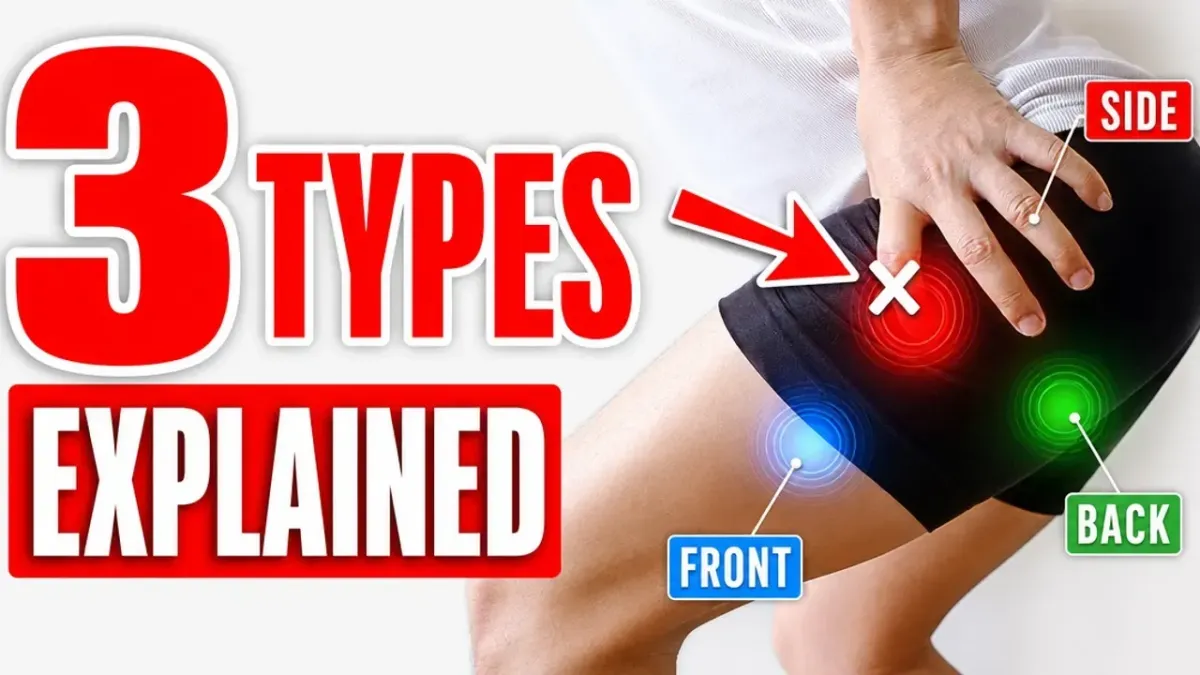
Hip Bursitis in Runners: 3 Types & How to Treat Them | Dr. Heather
Hip bursitis is one of those diagnoses that sounds straightforward, inflammation in a bursa. But in practice, it's frequently misunderstood, mismanaged, and treated generically in ways that don't match the actual problem.
If you're a runner who's been told you have hip bursitis, the single most important thing you can do is understand which type you have. The location, cause, and treatment differ significantly across the three main types and exercises that help one type can actively aggravate another.
After 25+ years working with active adults and runners, I've seen this mistake made repeatedly: a runner gets a generic "hip bursitis" diagnosis, follows generic hip bursitis exercises, gets worse, assumes the diagnosis is wrong, and cycles through providers without resolution.
Here's the full picture.
What Is a Bursa?
A bursa is a small, fluid-filled sac that sits between bones, tendons, and muscles to reduce friction and cushion movement. The hip has several bursae, and any of them can become inflamed. A condition called bursitis. When they're subjected to excessive compression, friction, or repetitive stress.
The inflammation itself is the symptom. The cause is the mechanical problem creating the excess load on the bursa.
The 3 Types of Hip Bursitis in Runners
Type 1: Greater Trochanteric Bursitis (Lateral Hip Pain)
This is by far the most common type in runners. The greater trochanteric bursa sits between the greater trochanter (the bony prominence on the outer hip) and the IT band and gluteal tendons that pass over it.
Where it hurts: The outer hip, sometimes radiating down the outer thigh. Often worse lying on that side, walking upstairs, or running hills.
What causes it: The IT band and TFL (tensor fasciae latae) repeatedly compress the bursa against the greater trochanter with each running stride. This happens when the IT band is excessively tight (from hip weakness) or when the hip drops excessively during stance both of which force the IT band into closer contact with the bony prominence beneath.
Hip abductor weakness, particularly the gluteus medius is the single most consistent finding in runners with greater trochanteric bursitis. A weak glute med allows the hip to drop during single-leg stance, which increases IT band tension and bursal compression.
What makes it worse: Direct compression (lying on the affected side), exercises that compress the lateral hip (side-lying leg raises with the leg crossing the midline), and anything that increases IT band tension without addressing the hip weakness underneath.
What actually fixes it: Strengthening the glute med and hip abductors in a progression that avoids painful compression. Reducing IT band tension. Correcting hip drop in gait. This is a loading problem, not just an inflammation problem. Anti-inflammatories and rest reduce symptoms temporarily but do nothing to address the mechanics.
Type 2: Iliopsoas Bursitis (Deep Groin/Front Hip Pain)
The iliopsoas bursa sits between the iliopsoas muscle (the primary hip flexor) and the front of the hip joint. It's the largest bursa in the body and, when inflamed, produces deep groin or anterior hip pain that is often confused with a hip flexor strain or even a labral tear.
Where it hurts: Deep in the groin or front of the hip, sometimes with a snapping or clicking sensation as the iliopsoas tendon moves across the bursal sac.
What causes it: Overuse and tightening of the hip flexor complex, extremely common in runners who sit a lot, run with anterior pelvic tilt, or use their hip flexors for propulsion instead of their glutes. Repeated hip flexion under tension (every running stride, amplified over miles) compresses and irritates the bursa.
What makes it worse: Hip flexion exercises (leg raises, high knee running drills), prolonged sitting after running, and any movement that compresses the front of the hip.
What actually fixes it: Hip flexor flexibility and length restoration. Glute activation to reduce hip flexor dominance. Correcting anterior pelvic tilt. Gradually reloading the hip flexor complex through pain-free ranges. This type of bursitis responds well to a corrective approach but requires patience. The hip flexor complex is used in literally every running stride, so it doesn't get rest just because you've reduced your mileage.
Type 3: Ischial Bursitis (Sit Bone Pain)
The ischial bursa sits over the ischial tuberosity, the sit bone at the base of the pelvis. Ischial bursitis is less common in runners than the other two types but occurs in runners who do significant hill work, trail running with steep climbs, or who sit for long hours between runs.
Where it hurts: Deep buttock pain, directly at the sit bone. Sitting on hard surfaces is particularly aggravating. Sometimes confused with proximal hamstring tendinopathy, which occurs at the same location.
What causes it: Repetitive compression of the bursa against the ischium, particularly from sustained forward hip flexion (as occurs on uphill running or aggressive hill training) or direct pressure from sitting.
What makes it worse: Prolonged sitting, direct compression of the sit bone, aggressive hamstring stretching, and uphill running before the inflammation has settled.
What actually fixes it: Load management (particularly reducing hill and tempo work temporarily), addressing sitting mechanics, and progressive hamstring and glute loading once acute inflammation has reduced. Aggressive stretching is counterproductive, it places tension directly on the bursa.
The Common Thread: Movement Mechanics
All three types of hip bursitis in runners share a common thread: they're the result of mechanical overload on a bursa, driven by movement patterns that haven't been corrected.
Greater trochanteric bursitis comes from hip abductor weakness. Iliopsoas bursitis comes from hip flexor dominance and anterior pelvic tilt. Ischial bursitis comes from hamstring/glute loading mechanics and compressive sitting positions.
In every case, treating only the inflammation without identifying and correcting the mechanical cause leads to recurrence.
Watch: 3 Types of Hip Bursitis Explained
This video breaks down exactly what distinguishes each type and what the assessment process looks like for determining which one you have.
What You Can Do Right Now
Identify your type. Where exactly is the pain? Outer hip = likely trochanteric. Deep groin/front hip = likely iliopsoas. Deep buttock at sit bone = likely ischial. This determines everything about what comes next.
Avoid compression. For trochanteric bursitis, don't lie on the affected side and avoid exercises where the leg crosses the midline. For iliopsoas, reduce deep hip flexion exercises temporarily. For ischial, get off hard chairs and use a cushion.
Don't stretch aggressively. This is counterintuitive but important: stretching into the painful range compresses or tensions the bursa and slows recovery. Gentle range-of-motion work is fine; aggressive stretching is not.
Address the hip weakness. Regardless of type, hip stabilizer work done in pain-free ranges and positions is almost always part of the solution. The key word is pain-free: loading into painful positions during an active flare makes things worse.
The Bottom Line
Hip bursitis in runners is not one condition it's three, each with a different location, cause, and treatment approach. Treating them generically leads to frustration and recurrence.
The runners who resolve hip bursitis permanently are the ones who identify their specific type, address the mechanical cause, and build the hip strength and movement quality to ensure it doesn't return.
Hip bursitis that won't fully resolve? Book a free movement consultation — I'll assess exactly which type you have and build a corrective plan around your specific movement patterns.
For related reading, my posts on hip pain when running and IT band syndrome cover the movement patterns most commonly linked to trochanteric bursitis.
Dr. Heather Gansel is a movement specialist and performance coach with 25+ years helping runners resolve chronic pain by identifying and correcting the root-cause movement imbalances behind their injuries. She works virtually with runners worldwide. Learn more.


About Us
Brand your success with personalized promotional merchandise that captivates your audience.
Copyright© 2026 Ask Dr. Heather - All Rights Reserved.
Facebook
Instagram
Youtube