Numb Toes While Running: Causes & Fixes | Dr. Heather
You're two miles into a run and your toes start to tingle. By mile four, they're completely numb. You wiggle them in your shoe, adjust your stride, try to ignore it but it keeps happening every single run.
Numb toes while running are more common than most people realize, and they're almost always dismissed as a shoe-fit problem. Sometimes that's true. But more often, there's a movement component that never gets addressed and that's why the problem persists even after you've tried three different pairs of shoes.
Here's a full picture of what's actually causing your toes to go numb when you run, and what to do about it.
Why Toes Go Numb During Running
Numbness in the toes is almost always a circulation or nerve compression issue or both. The question is what's creating the compression or reducing blood flow. There are several common culprits, and they're not mutually exclusive.
1. Foot Mechanics: Overpronation and Toe Compression
When the foot overpronates - the arch collapses inward with each step - the forefoot spreads and the bones in the foot splay apart. In a shoe, this spreading has nowhere to go, so it compresses the nerves running between the metatarsal heads (the long bones behind your toes). Repeated compression across thousands of steps produces the tingling and numbness runners describe.
This is the movement factor most often missed when numb toes are chalked up entirely to shoe fit. Yes, a wider toe box helps but if the underlying pronation pattern isn't addressed, you'll still compress those nerves, just less aggressively.
2. Laces Tied Too Tight
This one is straightforward but worth mentioning because it's often the fastest fix: laces tied too tightly across the top of the foot compress the dorsal nerve branches that supply sensation to the toes. Looser laces especially across the middle of the foot can resolve numbness immediately in some cases.
Try loosening your laces a full eyelet on your next run. If the numbness disappears, you've found it. If it doesn't, keep reading.
3. Nerve Compression Higher Up the Chain
Here's the one most runners never consider: nerve compression doesn't have to happen at the foot to cause toe numbness. The nerves supplying your toes originate from your lower back (the lumbar spine) and travel through the hip, thigh, and calf before reaching the foot.
If there's compression anywhere along that pathway at the spine, through a tight piriformis or other hip muscle, at the knee it can produce tingling, numbness, or burning in the feet and toes during running, when blood flow and nerve demand are highest.
Runners with low back issues, tight hip external rotators, or a history of disc problems often experience foot and toe numbness that has nothing to do with their shoes at all. If loosening your laces and switching shoes hasn't helped, this is worth exploring.
4. Poor Calf and Ankle Mechanics
The nerve and vascular supply to the toes runs through the calf and around the ankle. Tight calf muscles and restricted ankle mobility can compress these structures during the repetitive dorsiflexion of running. Runners who lack adequate ankle dorsiflexion which is extremely common, compensate in ways that further tighten the calf and increase compression with every stride.
5. Morton's Neuroma
A Morton's neuroma is a thickening of the tissue around the nerve between the third and fourth toes (most commonly). It produces numbness, tingling, or a burning sensation in that specific area often described as feeling like a pebble in the shoe. It's made worse by tight shoes and high-impact activities like running.
If your numbness is localized between specific toes (rather than the whole forefoot) and feels sharp or burning, Morton's neuroma is worth investigating with a healthcare provider.
The Movement Connection
What ties most cases of numb toes together, beyond shoe fit, is how the foot moves (or doesn't move) during running.
A foot that overpronates, that lacks intrinsic muscle control, that can't control the spread of the forefoot under load, that foot is going to compress nerves no matter what shoe it's in. And if the ankle can't dorsiflex freely, the calf will be chronically tight and the nerve supply to the foot will be compromised from above.
This is why I always look at numb toes in the context of the entire lower extremity movement pattern not just the foot in isolation.
What to Do About Numb Toes While Running
Start with the shoes. Make sure your running shoes have adequate toe box width. Your toes should be able to splay naturally without pressing against the sides. Also check that laces aren't too tight across the midfoot.
Try loosening your laces mid-run. If the numbness starts at a predictable point, try loosening your laces slightly before that point. If it helps, lace tightness is at least part of the issue.
Work on foot intrinsic strength. Towel scrunches, toe spreads, and single-leg balance work on an unstable surface all strengthen the intrinsic foot muscles that control the arch and reduce forefoot spread during loading.
Assess your ankle mobility. The dorsiflexion test: in a half-kneeling position, drive your knee forward over your foot. If you can't get it past your toes without your heel lifting, ankle mobility restriction is contributing.
Check for hip and back involvement. If toe numbness happens even when walking or cycling, or if you have any history of low back pain, hip tightness, or sciatic symptoms, the nerve compression may be coming from above the foot. This warrants a full movement assessment.
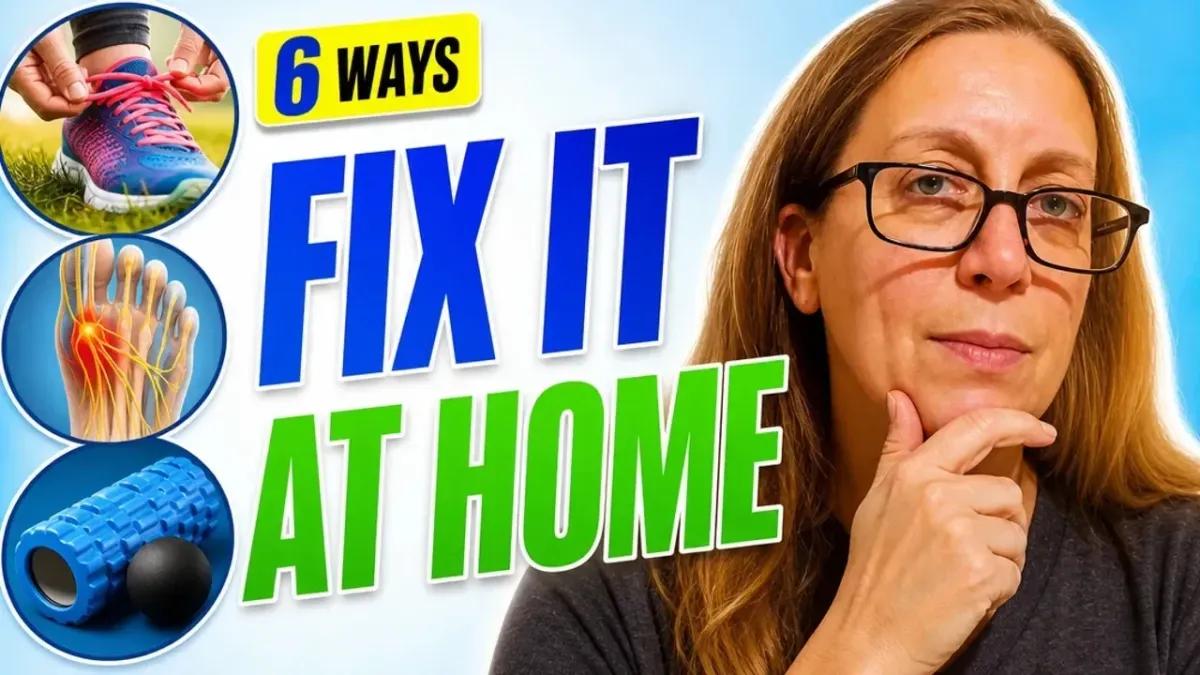
Watch: Numb Toes While Running — What's Really Happening
In this video I walk through the most common causes and the assessment process I use to figure out where the nerve compression is actually coming from.
The Bottom Line
Numb toes while running are a signal, not a nuisance. They're telling you that a nerve or vascular structure is being compressed somewhere along its path and that compression almost always has a movement component that shoes alone can't fix.
The good news is that once you identify where the compression is coming from, this is one of the more straightforward running complaints to address.
Toes going numb on every run? Book a free movement consultation and I'll assess your foot mechanics, ankle mobility, and hip patterns to find where the issue is actually coming from.
Dr. Heather Gansel is a movement specialist and performance coach with 25+ years helping runners resolve chronic pain and movement issues at the root cause. She works virtually with runners worldwide. Learn more.


