TENS Units for Runners: Do They Work? | Ask Doctor Heather
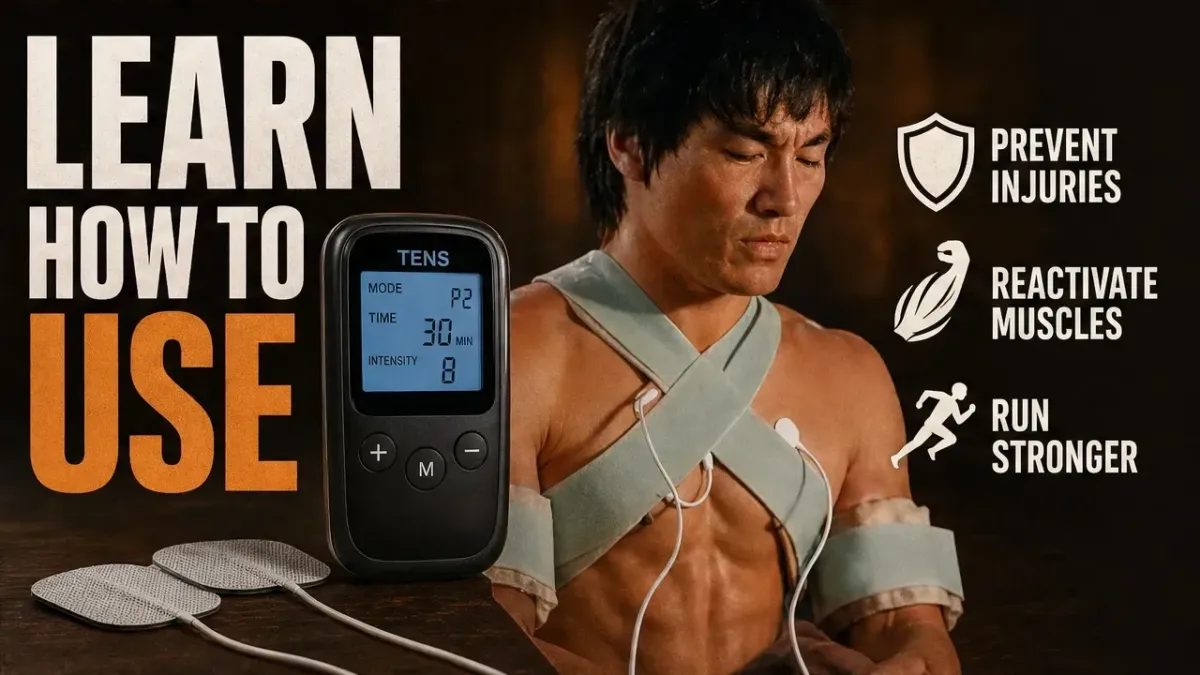
TENS units (small, portable electrical stimulation devices) have been used in clinical settings for decades, and they've become increasingly accessible for home use. You can buy a decent one for $30–80 online, which means many runners already own one or are curious about trying one.
The problem is that most people who use TENS don't fully understand what it does (and doesn't do), which leads to either using it incorrectly or dismissing it as useless when it doesn't produce results it was never designed to produce.
Here's a clear explanation of the mechanism, what TENS can realistically do for runners, and how to use it effectively.
What TENS Is (and Isn't)
TENS stands for Transcutaneous Electrical Nerve Stimulation. The device delivers low-voltage electrical current through electrode pads placed on the skin. The current stimulates sensory nerves - not motor nerves (which would cause muscle contraction) in the target area.
TENS is primarily a pain modulation tool. It does not heal tissue, break up scar tissue, restore movement patterns, strengthen muscles, or accelerate structural repair. Its primary value is reducing pain perception, which can be useful both for symptom management during the rehabilitation process and for improving quality of life during recovery from running injuries.
If you're expecting TENS to fix your IT band syndrome or resolve your plantar fasciitis, it won't at least not on its own. But if you're using it to reduce pain enough to sleep, to move more comfortably during recovery, or to participate in physical therapy exercises you couldn't otherwise tolerate, it's genuinely useful.
How TENS Reduces Pain: The Gate Control Theory
The most accepted explanation for how TENS works is Gate Control Theory, proposed by Melzack and Wall in 1965.
The theory proposes that the spinal cord has a "gate" that controls the flow of pain signals to the brain. Non-painful sensory input, the kind generated by TENS stimulation, can essentially crowd out or override pain signals, closing the gate and reducing the perception of pain.
This is the same mechanism behind why you instinctively rub a sore spot. The rubbing produces non-painful sensory input that competes with the pain signal. TENS does the same thing, more precisely and persistently.
A second proposed mechanism involves endorphin release. Certain TENS frequencies, typically lower frequency, higher intensity settings, may stimulate the release of endorphins, the body's endogenous pain modulators. This is the rationale behind acupuncture-like TENS protocols that use lower frequencies and more intense stimulation.
TENS vs. EMS: An Important Distinction
TENS is frequently confused with EMS (Electrical Muscle Stimulation), and many devices sold as "TENS/EMS" units combine both functions. They're different:
TENS targets sensory nerves. The stimulation feels like tingling or buzzing. No muscle contraction should occur.
EMS targets motor nerves. It causes visible muscle contraction and is used for muscle re-education, preventing atrophy during immobilization, and sometimes for strength building.
For pain relief in runners, you want the TENS setting. For muscle activation for example, stimulating quad contraction during recovery from knee surgery you want the EMS setting. Using the wrong mode reduces effectiveness.
Running Injuries Where TENS Is Most Useful
Knee pain (patellofemoral, meniscus, general): The knee is one of the most well-studied areas for TENS application. Multiple trials show meaningful short-term pain reduction with TENS for knee OA and general knee pain. For runners, this can be useful during the acute phase of an injury or during the early stages of rehabilitation when pain limits participation in corrective exercise.
Low back pain with running: Runners who develop back pain on longer runs often find TENS applied to the lumbar region helpful for overnight pain management and morning stiffness. This doesn't address the movement pattern causing the pain, but it can make daily function more manageable during the corrective process.
IT band pain: TENS applied along the lateral thigh and knee can reduce the sharp pain of IT band syndrome between training sessions. Again, this is symptom management, not cause resolution but symptom management has real value when you're trying to maintain some training while addressing the underlying hip stability issue.
Plantar fasciitis: TENS to the plantar surface and heel is reported by many patients to reduce the morning first-step pain of plantar fasciitis. The evidence here is less robust than for knee pain, but the clinical anecdotal support is strong.
Shin splints: TENS along the medial tibial border can reduce local pain perception during recovery. Combined with load management and corrective exercise, it's a reasonable adjunct.
How to Use TENS Effectively
Electrode placement matters. Place pads around (not directly on) the most painful area, or along the nerve pathway supplying the area. For knee pain, pads typically go above and below the knee joint. For plantar fasciitis, one pad on the heel and one on the calf is common.
Frequency and intensity settings:
High frequency (80–150 Hz), low intensity: The standard setting for most pain relief applications. Produces the tingling sensation. Use for 20–30 minutes.
Low frequency (2–10 Hz), higher intensity: More acupuncture-like stimulation. Some users find this provides longer-lasting relief, though it's less comfortable. Use for 20–30 minutes.
Burst mode: Alternates between high and low frequency in bursts. Some devices offer this; it's comfortable and provides a combined effect.
Start at a low intensity and increase until you feel a comfortable tingling not a painful buzz. The sensation should be noticeable but not unpleasant.
Duration: 20–30 minutes per session is standard. More isn't necessarily better, and your skin will start to desensitize to the sensation in a single session.
Timing: TENS can be used before exercise (to reduce pain enough to participate), after exercise (for recovery), or at night for sleep. Avoid using it over acutely inflamed tissue in the first 24–48 hours after injury onset.
What TENS Cannot Do
TENS cannot:
Heal a stress fracture
Resolve inflammation in an acutely injured tendon
Fix a movement pattern that's causing recurring injury
Replace rehabilitation or corrective exercise
Provide lasting pain relief without addressing the underlying cause
Runners who use TENS to manage enough pain to keep running through an injury that needs rest are using it counterproductively. Pain is information. TENS can reduce the signal, it doesn't change what's causing it.
The Bottom Line
TENS is a legitimately useful, low-risk, low-cost tool for pain management during running injury recovery. Used appropriately as symptom management in support of a corrective program, not as a replacement for one. It can meaningfully improve daily function and comfort during the rehabilitation process.
If you're not sure what's causing your pain or whether TENS is the right tool for your situation, a movement assessment will give you the full picture.
Book your movement assessment → askdoctorheather.com
Manage the pain. Fix the cause.
Dr. Heather Gansel is a doctorate-trained movement specialist with 25+ years in biomechanics. She works with runners virtually through Ask Doctor Heather, helping them identify and resolve the root-cause movement patterns behind recurring pain and performance plateaus. Follow her on Instagram @drheathergansel.


