Graston Technique for Runners: Does It Work? | Ask Doctor Heather
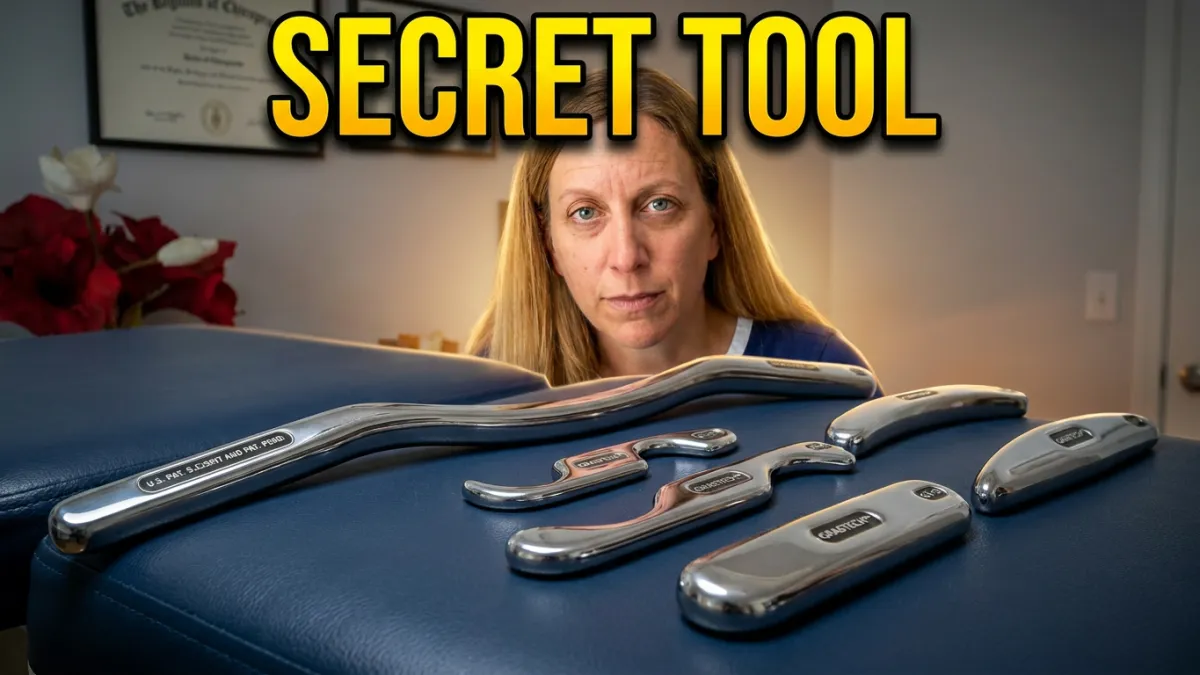
If you've ever seen a practitioner scraping someone's skin with what looks like a stainless steel butter knife, you've seen Graston Technique or one of its variations in action.
It looks aggressive. It often produces a distinctive bruising pattern. And runners who've had it done tend to have strong opinions: either it worked when nothing else did, or it seemed to do very little.
Whether it's right for you depends on what's actually going on in your tissue and where Graston fits in the larger treatment picture. Here's what you need to know.
What Graston Technique Is
Graston Technique is a form of Instrument-Assisted Soft Tissue Mobilization (IASTM), a manual therapy approach that uses specially shaped stainless steel instruments to detect and treat fibrotic or restricted soft tissue.
The instruments are curved and contoured to fit different body regions. The practitioner uses them to scan the tissue surface, feeling for areas of increased resistance (called "fibrotic change") that indicate the presence of scar tissue, adhesions, or connective tissue restrictions. Once located, the instruments are used to apply targeted pressure and friction to those areas.
The proposed mechanisms include: mechanical disruption of scar tissue, stimulation of local blood flow and cellular repair activity, and activation of mechanoreceptors that can modulate pain signaling. The bruising (petechiae) that often follows treatment is a normal response to the disruption of superficial capillaries in the treated area and typically resolves within a few days.
How Graston Differs from ART and Massage
These three treatments are often confused because they're all hands-on soft tissue work, but they operate differently.
Massage uses pressure and movement to increase circulation, reduce muscle tension, and promote relaxation. It works on the level of the muscle belly and generally doesn't produce the specific adhesion-breaking effect that Graston or ART are designed to achieve.
ART (Active Release Technique) uses precise manual tension combined with active patient movement to break adhesions between tissue layers. The patient is an active participant in the treatment.
Graston uses the instrument to increase the mechanical force applied to the tissue and to detect restrictions that might not be as palpable with fingers alone. The instrument amplifies the practitioner's ability to find and treat specific areas of fibrosis. The patient is generally passive during treatment.
In practice, many providers use these techniques in combination: Graston to identify and begin breaking down fibrotic areas, followed by ART to address adhesions between layers, followed by exercise to reinforce the newly restored movement capacity.
What the Research Shows
The research on IASTM (the broader category that includes Graston and similar techniques) shows consistent benefit for specific soft tissue conditions, particularly tendinopathies and post-surgical scar tissue.
Studies show Graston and IASTM improve:
Plantar fasciitis pain and function
Achilles tendinopathy
Patellar tendinopathy (jumper's knee)
Lateral epicondylitis
Post-surgical adhesions
The effect size is generally moderate and meaningful, but typically not dramatic on its own. The strongest outcomes in research and clinical practice come when IASTM is combined with therapeutic exercise, particularly eccentric loading for tendinopathies.
Where the research is less clear is in longer-standing, complex injuries with multiple contributing factors which describes many chronic running injuries. These often require the soft tissue treatment to be embedded in a broader corrective program.
Where Runners Benefit Most from Graston
In my practice, Graston is most useful in runners for:
Chronic plantar fasciitis. The plantar fascia develops significant fibrotic change in chronic cases. Graston can reach the medial plantar fascia and the intrinsic foot muscles more specifically than many hands-on techniques. Combined with calf eccentric work and hip corrective exercise, it often breaks through plateaus in runners who've had plantar fasciitis for more than 3 months.
Achilles and posterior calf complex. The Achilles tendon and its junction with the soleus and gastrocnemius develop scar tissue and fibrosis with repetitive loading. Graston to the calf-Achilles complex, paired with eccentric calf loading, is a well-supported protocol.
IT band and lateral hip tissue. The IT band itself doesn't respond to Graston (for the same reason it doesn't stretch, it's not a muscle). But the TFL, vastus lateralis, and gluteus medius surrounding it frequently have fibrotic restrictions that respond well. When the surrounding tissue quality improves, the IT band tension typically reduces.
Chronic shin splints (medial tibial stress syndrome). The periosteal tissue along the medial tibia, the attachment site for the soleus and deep posterior compartment muscles, develops fibrosis in chronic cases. Graston to this area can reduce the tethering that contributes to ongoing pain.
Post-surgical scar tissue. Runners who've had knee surgery, ankle reconstruction, or hip procedures often have adhesions in the surgical area that restrict movement for months afterward. Graston is one of the most effective tools for mobilizing post-surgical tissue.
What Graston Can't Do
Like ART, Graston treats soft tissue quality it doesn't address movement patterns.
A runner with chronic IT band syndrome who gets Graston to their lateral hip and TFL will often feel significant relief in the days following treatment. But if their glutes aren't firing correctly at foot strike and their hip is still dropping with every stride, the tissue is going to keep being overloaded. The fibrosis will reform. The pain will return.
Graston works best as part of a treatment system: address the tissue quality, then address the movement pattern that's creating the tissue problem in the first place.
What to Expect During Treatment
Graston sessions typically last 10–15 minutes for the actual instrument work, often preceded by some heat application and followed by stretching or exercise. The sensation during treatment ranges from mild pressure to significant discomfort, depending on the location and the extent of fibrotic change. More restriction usually means more sensation.
Post-treatment bruising is normal and expected, especially at first. The bruising tends to decrease as the tissue quality improves over successive sessions. Most protocols involve 2 sessions per week for 4–6 weeks, with progression into rehabilitative exercise between sessions.
Is It Worth It?
For runners with chronic soft tissue restrictions particularly in the plantar fascia, Achilles, IT band region, and shin Graston is a legitimate and often effective treatment tool. It works best for people who have clear tissue-level restrictions and who combine it with a corrective exercise program.
If you're not sure whether your injury involves soft tissue restriction versus a movement pattern problem versus something else entirely, the starting point is always a movement assessment. That gives you a clear picture of what's driving the problem and what the right tools are.
Book your movement assessment → askdoctorheather.com
Know what you're treating before you treat it.
Dr. Heather Gansel is a doctorate-trained movement specialist with 25+ years in biomechanics. She works with runners virtually through Ask Doctor Heather, helping them identify and resolve the root-cause movement patterns behind recurring pain and performance plateaus. Follow her on Instagram @drheathergansel.


